How Our 5 NQ Trading Strategies Work
Five rules-based strategies on one instrument: NQ (Nasdaq 100) futures. Combined into a single book, they backtest to +1,112.2% across 3,500 trades, 2011 to 2026, at one to three contracts scaled by volatility. Each strategy does a different job. A different session, direction, or trade logic. That difference is the whole point, and we measured it instead of assuming it (average pairwise correlation 0.11, details below).
Methodology, up front: every figure on this page comes from TradingView strategy backtests on NQ (CME), 2011 to 2026, run at one to three contracts scaled by volatility. The combined book numbers match the official portfolio report on the tear sheet and are data as of August 5, 2026. The per-strategy standalone figures below are from the June 2026 export. These are hypothetical backtest results, not live fills. The same breakdown, with every equity curve and trade-analysis chart, lives on our strategies page.
One note before the details. All five strategies are momentum and trend-continuation models. They wait for the market to confirm a move, then ride it. None of them fade moves or trade mean reversion. So the patterns below (low win rates paid for by big winners, profit bunched in trending stretches) come from that style, not from NQ itself. The book also runs a regime risk-off overlay that pulls it out of the market when conditions turn hostile, which is part of why a higher-return v8 still keeps its risk in check. If you trade discretionary, the transferable part is the structure: pick a session, wait for confirmation, scale size to volatility (we use 1 to 3 contracts), and measure correlation instead of assuming it. Our exact win rates and returns are ours. Do not size your own trading off them.
What is our NQ trading strategy?
Our NQ trading strategy is a rules-based portfolio of five systematic models traded on NQ (Nasdaq 100) futures, not a single setup. Each model does a different job, covering a different session, direction, or trade logic, and all five are momentum and trend-continuation systems that wait for the market to confirm a move before entering. Combined into one book that holds one position at a time, they backtest to +1,112.2% across 3,500 trades from 2011 to 2026, sized at one to three contracts scaled by volatility. The five are Trend Short, Trend NQ, Opening Range Break Long, Overnight Trend, and Universal Trend, detailed below.
The five strategies at a glance
| Strategy | Direction | Session | Return | Trades | Win rate | Reward:risk |
|---|---|---|---|---|---|---|
| Trend Short | Short | Regular | +382.0% | 412 | 40.8% | 3.09:1 |
| Trend NQ | Long | Early | +316.5% | 944 | 34.0% | 2.96:1 |
| Opening Range Break Long | Long | Post-open | +284.2% | 1,653 | 49.8% | 1.33:1 |
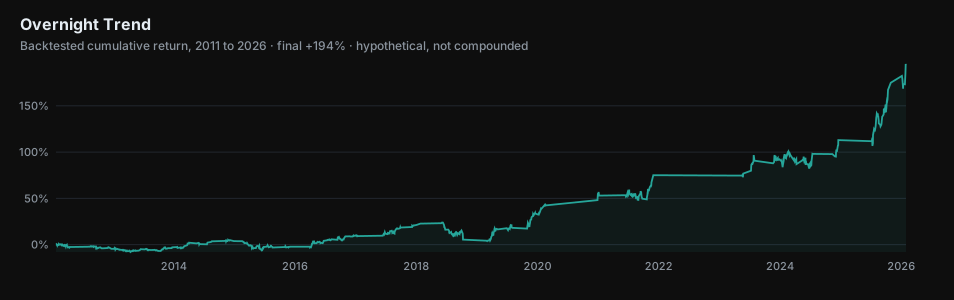
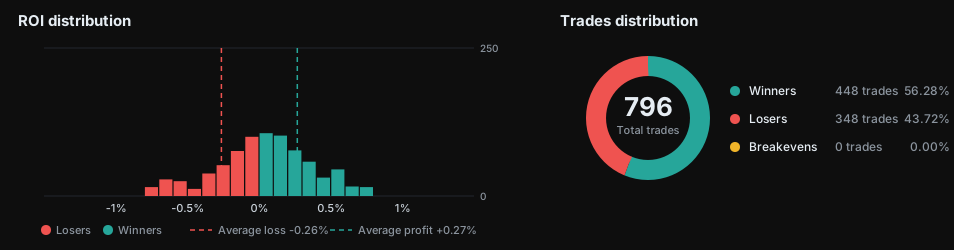
| Overnight Trend | Long | Overnight | +194.3% | 796 | 56.3% | 1.22:1 |
| Universal Trend | Long & Short | Main | +161.0% | 319 | 51.4% | 1.63:1 |
Five different jobs: three long-side, one short-side, one both-ways, spread across the early session, the open, the regular session, and overnight. These are standalone backtest figures for each strategy, run alone. The combined book holds one position at a time and nets to 3,500 trades, explained below. Each strategy is covered in turn. Then the part that matters most: how they behave together. (Reward:risk here is the average winning trade in dollars divided by the average losing trade.)
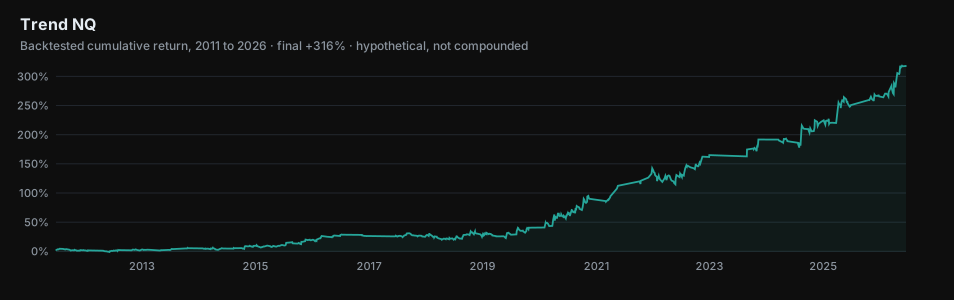
Trend NQ: a low win rate, retuned in v8 to trade twice as often
Long · Early Session
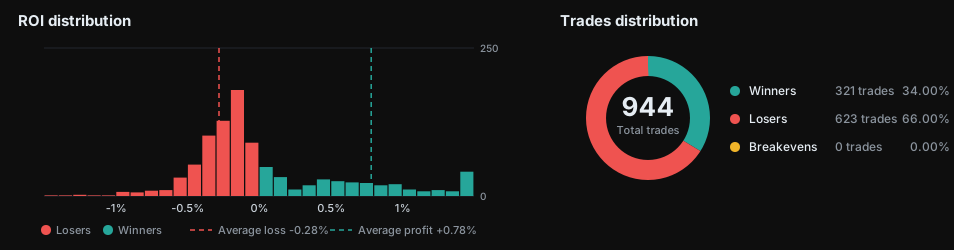
An early-session long momentum model that catches confirmed bullish moves. It does not predict. It waits for the market to show real upside momentum, confirms it on price, then sizes the position to current volatility and lets the trend run under strict risk limits. Classic trend following: be wrong often, get paid well when right. It does its damage in sustained trends and mostly sits out the chop. The 34% win rate is low by design, so it is wrong roughly two times in three and makes its money on the third. For v8 we retuned its reference to the prior session's settlement, which close to doubled how often it trades (434 to 944) and widened its average winner to nearly three times its average loser.
Backtest performance (2011-2026): +316.5% total return · 944 trades · 34.0% win rate · $2,858 avg win / -$965 avg loss · 2.96:1 reward-to-risk
Opening Range Break Long: the workhorse, 1,653 trades off the open
Long · Post-Open (9:30 to 9:45 range)
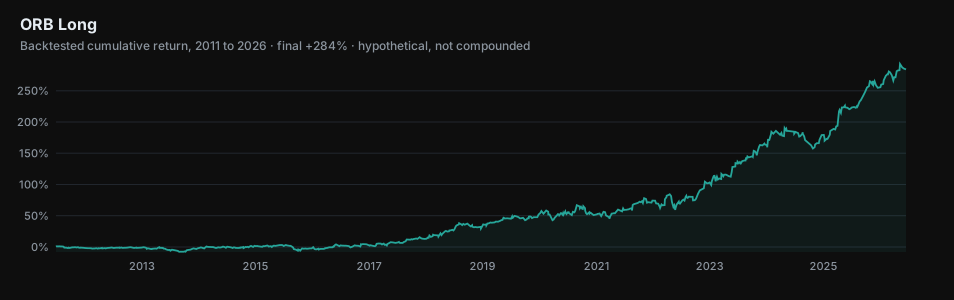
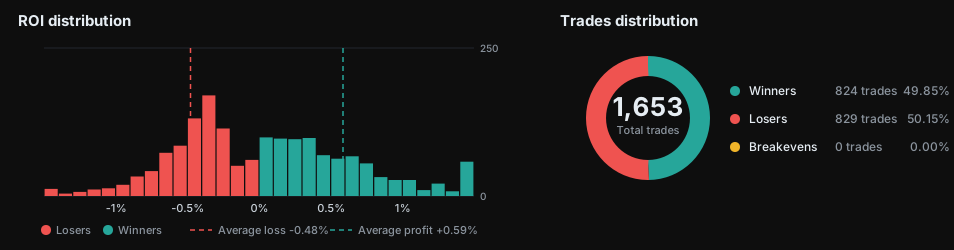
The market forms its first range from 9:30 to 9:45 AM ET. This strategy waits for that range to finish. Then it trades confirmed bullish breakouts from it on 5-minute candles, acting only on closed bars, never inside unfinished ones. It never tries to call the first move of the day. Structure first, breakout second. It is the workhorse of the book, with the most trades by far (1,653) and a near coin-flip win rate, so its contribution is steady volume rather than the lopsided payoff the trend models chase. Its entries land in the 9 ET open hour, which carries 60.1% of book profit.
Backtest performance (2011-2026): +284.2% total return · 1,653 trades · 49.8% win rate · $1,406 avg win / -$1,055 avg loss · 1.33:1 reward-to-risk
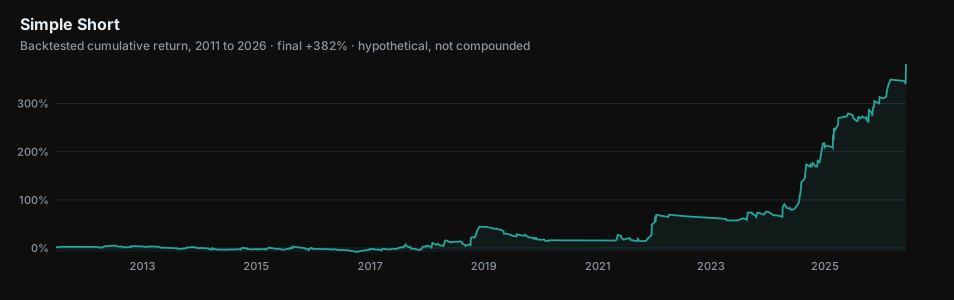
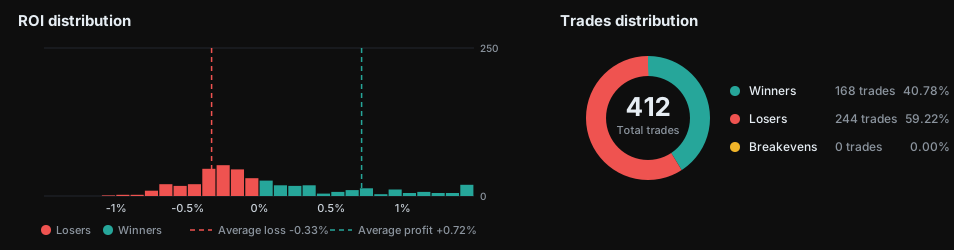
Trend Short: 412 trades in 15 years, and the book's biggest earner
Short · Regular Session
An intraday short model for controlled weakness during the regular session. It is not an opening range strategy, and it does not short every red candle. It waits for a defined bearish setup, then uses VWAP-based exits to get out the moment the short idea stops working. Being picky is the design: 412 trades across 15 years. A short book that earns money over a stretch the market mostly spent rising is rare, and this one does more than survive: its winners average $4,297 against $1,393 losers, a convex payoff that makes it the single largest profit contributor in the book.
Backtest performance (2011-2026): +382.0% total return · 412 trades · 40.8% win rate · $4,297 avg win / -$1,393 avg loss · 3.09:1 reward-to-risk
Universal Trend: trades only when the regime says trend
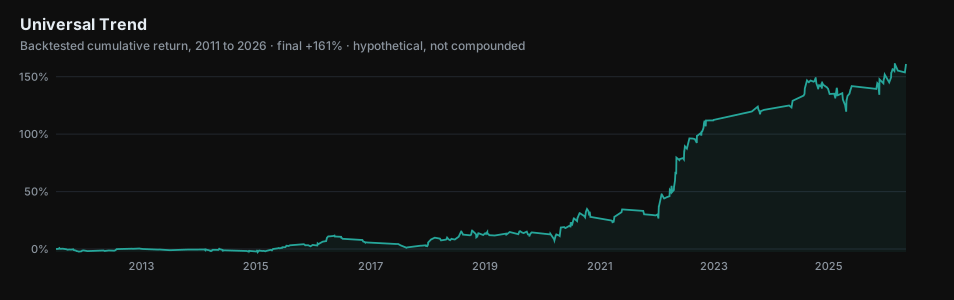
Long & Short · Main Session
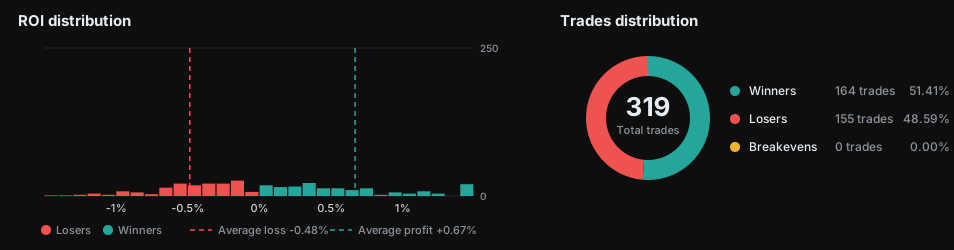
A broader intraday trend model that trades the main session, after the opening noise settles, in either direction. Unlike the ORB strategies, it ignores the first 15-minute range. It needs a regime filter to confirm a real trend first, then uses VWAP structure for entry timing and ATR-based stops that adjust to current volatility. It is the most selective model in the book, just 319 trades in 15 years, and the only one that works both directions inside the regular session, so it can stay engaged when the one-way strategies have nothing to trade.
Backtest performance (2011-2026): +161.0% total return · 319 trades · 51.4% win rate · $2,335 avg win / -$1,432 avg loss · 1.63:1 reward-to-risk
Overnight Trend: the only strategy working while the others sleep
Long · Overnight (Globex)
NQ behaves differently overnight. Liquidity thins out, the players change, and volatility runs on its own schedule. So this model treats the Globex session as its own market. It takes its cue from the prevailing trend, enters long during the overnight session, and is flat before the regular session opens. Sizing stays small unless conditions are clean enough to scale. None of its logic touches the opening range or intraday momentum. It also trades unlike anything else in the book: the highest win rate of the five (56.3%) paired with a near-even win and loss size, so it grinds out its return instead of swinging for the big asymmetric payoff. That is why it diversifies the book in a way no daytime tweak could. The standalone case for it, 796 trades at a 0.06 correlation to the day session, is in our 14-year NQ overnight strategy backtest.
Backtest performance (2011-2026): +194.3% total return · 796 trades · 56.3% win rate · $1,200 avg win / -$987 avg loss · 1.22:1 reward-to-risk
All 5 strategies. One system.
The portfolio is the product, not any single setup. Each strategy earns its slot by doing a job the others do not. The combined book is what we trade and publish.
| Combined portfolio (2011-2026) | |
|---|---|
| Total return | +1,112.2% ($1,112,232 on $100k, 1-3 contracts vol-scaled) |
| Total trades | 3,500 |
| Win rate | 45.5% |
| Reward:risk (avg win / avg loss) | 1.86 |
| Expectancy per trade | $318 |
| Sharpe / Sortino / Calmar | 1.35 / 2.60 / 0.89 |
| Max drawdown (dollars, closed-trade) | $51,836, being 4.3% of the $1,216,816 equity peak it fell from |
| Max drawdown (dollars, open-trade, the basis a prop firm's trailing drawdown measures) | $55,050 |
| Max drawdown (percentage) | 20.4%, a separate and much earlier episode, measured against peak equity on the small account this book started from in 2011 |
| Positive years | 13 of 16 (worst -$4,889) |
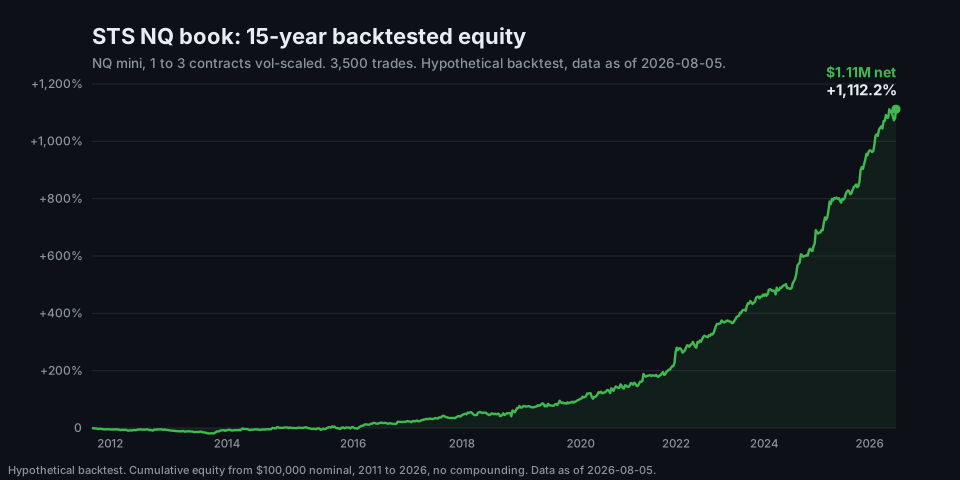
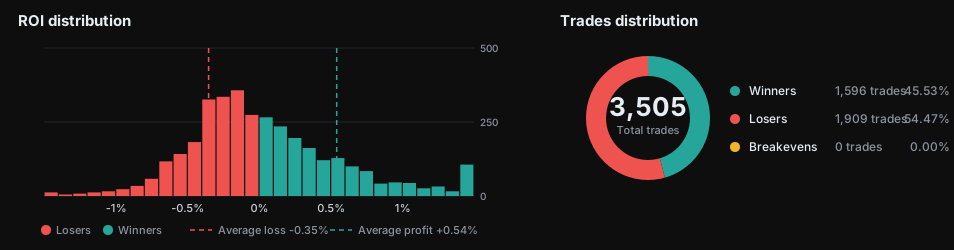
The full visual version of this breakdown also lives on our strategies page.
Why five beat one: the diversification is measured, not assumed
"Diversification" is the most over-used word in trading. Here it is an actual number. We measured the daily-profit correlation between all five strategies across 2,542 trading days. The average pairwise correlation is 0.11, close to independent.
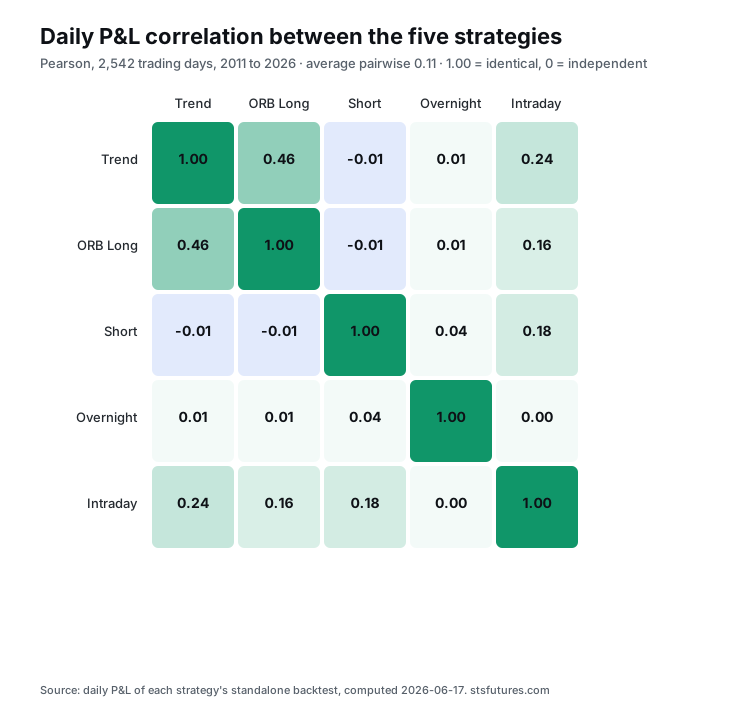
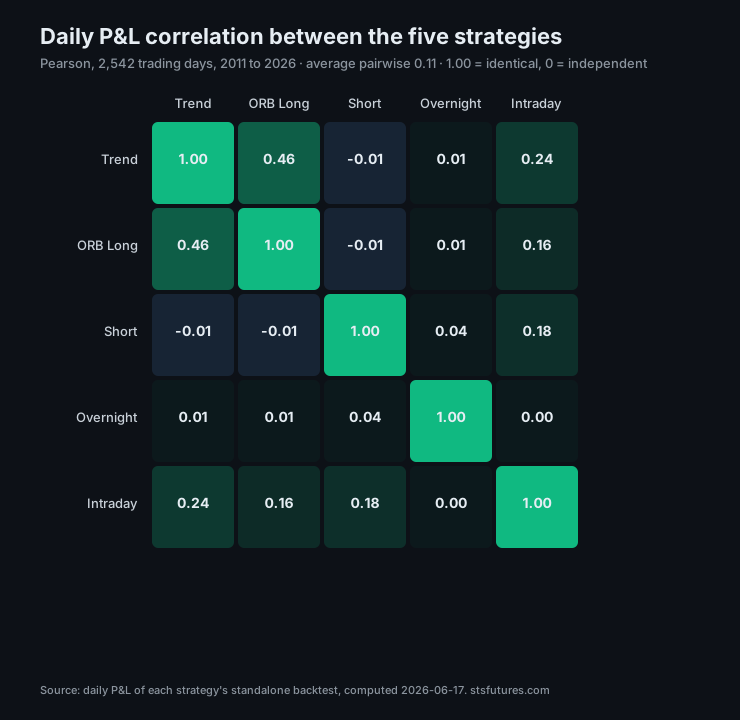
The overnight model is the standout. It correlates essentially zero (between 0.00 and 0.04) with every other strategy, because it trades a different session entirely. The two early long models share the most, 0.46 between Trend and the opening-range break, which makes sense: after the v8 retune they both look for early-session strength, so they fire on some of the same mornings. That is the one pair worth watching. Everything else is near independent: the intraday model runs 0.24 with Trend and 0.18 with the short, and the short book is independent of both long models (-0.01), so it tends to earn exactly when the long book stalls.
The five are not equally strong on their own. Run alone, their Sharpe ratios (return per unit of risk) range from 0.80 for the convex short to 1.06 for the overnight sub, measured the same way as the book's 1.35. Every one of the five is worse alone than the five are together. That is the whole case for the book, and it is why we do not keep only the elite ones. Each strategy earns its slot by paying off when the others cannot, not by being a star by itself. A teammate that fills a gap beats a second player who doubles a bet you already have. That is why we judge a strategy by what it adds to the book, never by its solo numbers. The general version of that method is in how to build a profitable NQ strategy from marginal edges.
Low correlation is the reason the whole book's worst drawdown ($51,836) is a fraction of the five standalone drawdowns added together ($140,566). The strategies take turns getting hurt. Read that comparison with its date gap in mind: the standalone figures are measured to June 17, 2026, the book to August 5, 2026, so the book number includes a July 2026 drawdown the sub figures have not been re-measured through.
Run the five separately and their returns add up to roughly +1,338%. The book does not work that way. It holds one position at a time, so the strongest signal takes the slot and the total lands at +1,112.2%. What you get for giving up that paper upside is the smaller drawdown in the callout above. Five edges, one account, and a smoother ride than any single piece can deliver.
How we know the edge is real (not curve-fit)
A 15-year backtest only means something if it survives the tests built to expose curve-fitting. This one clears all of them:
- The t-stat clears the 3.0 hurdle. Harvey and Liu set a t-stat of 3.0 as the bar for a real edge. The book clears it, so luck is a very unlikely explanation.
- The Deflated Sharpe passes. This penalizes the Sharpe ratio for how many variations we tried (3,000 in this build). It passes the 90% threshold this test sets, so the edge holds up after that penalty.
- Probabilistic Sharpe passes the robustness bar. The chance the true Sharpe sits above zero, given the data, rounds to certain.
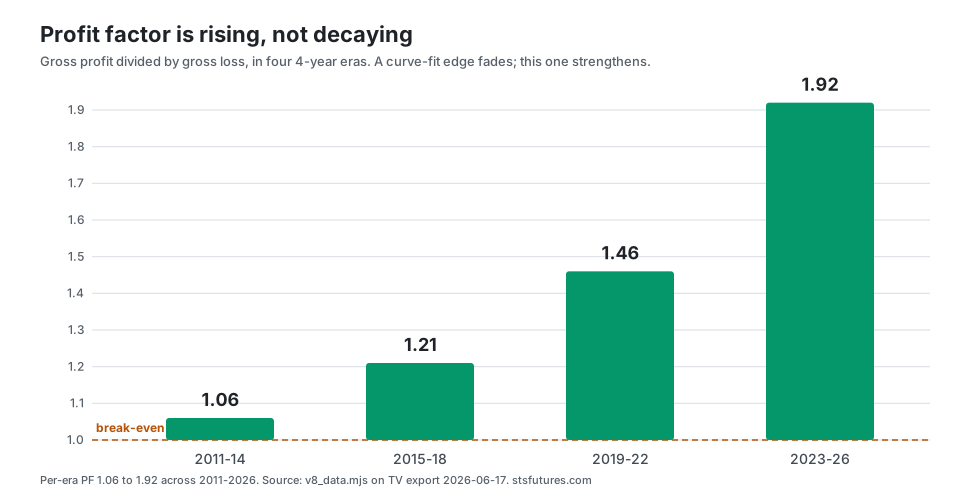
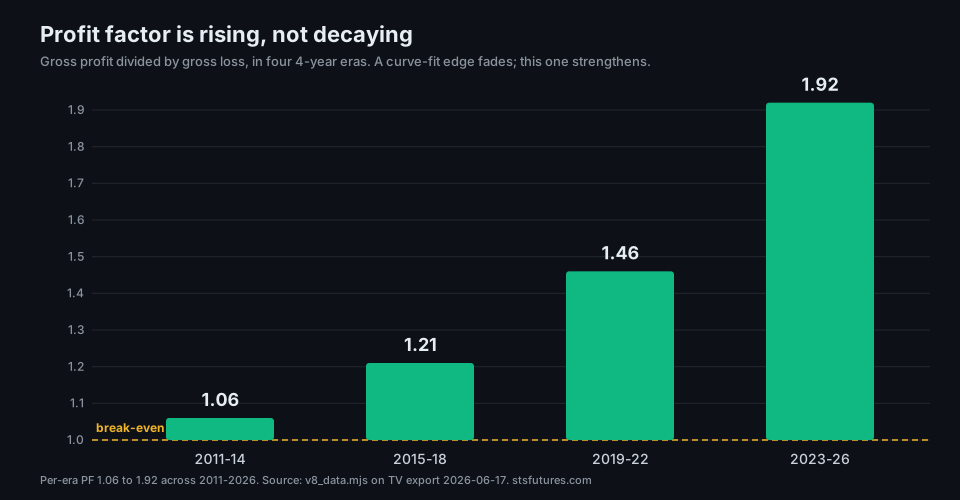
- Positive in every non-overlapping 4-year era, and rising, from 1.01 (2011 to 2014) to 1.86 (2023 to 2026). The edge is getting stronger over time. A curve-fit result decays instead.
- Positive skew (+2.31 on daily returns). Winners run fatter than losers, so the result does not hang on one lucky tail trade.
- Beta to NQ buy-and-hold: withdrawn. We are re-deriving the benchmark regression, so we are not quoting the figure until it reconciles.
- Fifteen years and 3,500 trades. Far more data than any single parameter choice needs to prove itself out of sample.
The full institutional stat suite is on the performance tear sheet. If you want to run these same checks on your own system, we walk the whole process in is my backtest overfit.
What this page does not promise
These are backtests. They assume the book's volatility-scaled sizing of one to three contracts and a fill on every signal. Live trading adds slippage, missed fills, and the discipline problem of sitting through a 45.5% win rate. Long losing streaks are normal here, not a malfunction. The $51,836 max drawdown is the worst the backtest produced, not the worst that can happen. Reshuffling the same trades 10,000 times puts it at the 72nd percentile: the typical ordering drew down about $45,379, less than the backtest produced, and one in twenty exceeded $67,838. Size against that tail, not against the single path the record happened to take. The method is in expect a worse drawdown than your backtest. We have also tried to improve this book many times, with execution variants and new candidate strategies. Most of those experiments added nothing, which is exactly what the overfit tests are built to reveal. The five above are what survived.
Trade the system
Deciding which contract to trade these on? Here is how NQ compares to ES. For the same record put under the quant edge tests, see our NQ futures signals, with the full 15-year record. Ready to see the live signals? See pricing and get access.
All performance data shown is from TradingView backtests and represents hypothetical results; as required under CFTC Rule 4.41, hypothetical results have inherent limitations, do not represent actual trading, and are prepared with the benefit of hindsight, so no representation is made that any account will achieve similar profits or losses. Past performance is not indicative of future results. Disclosure: we trade this system live and sell access to the signals; judge the data accordingly. Trading futures involves substantial risk of loss and is not suitable for all investors. These strategies are provided for informational purposes only and do not constitute financial advice.