Prop firm first payout: which route is actually fastest
Ask three prop firms what stands between a funded account and the first dollar out, and you get three answers that have nothing in common.
Apex wants five days that each clear a dollar figure, plus a balance above a fixed safety net. Take Profit Trader wants no days at all, just a balance above a buffer. Topstep's shortest path wants three trading days with one trade each, and no winning-day requirement at all.
Those are three different hurdles, not three versions of one. Which is shortest depends on the shape of your daily P&L, not on the firm's marketing.
The three gates, in their own words
Apex 50K Performance Account. Five trading days before a payout can be requested, and they must be winning days. On the EOD product, "only days that meet the minimum daily profit count toward the 5-day requirement." That minimum is $250 net. On the Intraday product it is $200.
The account must also sit above a Safety Net of $52,100, with a minimum request balance of $52,600. No single day may be 50% or more of profit since the last approved payout. Payouts up to weekly. First payout capped at $1,500. Split is 100%.
Topstep 50K Express Funded Account. Two paths, and they are not the same length. The Standard path needs "5 winning days of $150+ Net P&L," not required to be consecutive. It caps a 50K payout at 50% of balance, up to $2,000.
The Consistency path needs "3 trading days with at least 1 trade per day," with no winning-day requirement at all. It caps the largest single day at 40% of total net profit and allows up to $3,000. Neither path has a buffer: the XFA balance starts at $0, and the requirement is positive net profit of at least $0.01 since the last payout. Minimum payout $125. Split is 90/10.
Take Profit Trader 50K PRO. "When you reach your PRO account, you have the ability withdraw funds on day one. However, you must build a buffer on the account first." The buffer zone on a 50K is $52,000, and profits above it come out at 80%. No minimum-days requirement appears on any live page, and no consistency rule appears in the PRO Account Rules or the Universal Trading Policies. Both are flagged below as unverified absences, not as rules.
| Firm and path | Days required | Dollar floor per day | Account buffer | Consistency at payout | First payout cap |
|---|---|---|---|---|---|
| Apex 50K EOD | 5 | $250 | $52,600 to request | 50% | $1,500 |
| Apex 50K Intraday | 5 | $200 | $52,600 to request | 50% | $1,500 |
| Topstep XFA Standard | 5 winning | $150 | none | none | $2,000 |
| Topstep XFA Consistency | 3 trading | none | none | 40% | $3,000 |
| Take Profit Trader PRO | none published | none published | $52,000 | none found | none published |
On paper the Topstep Consistency path is the shortest published route to money here: three days, one trade each, no winning-day floor, no buffer. It buys that speed with a 40% cap on the largest day, the tightest consistency gate any of them applies.
The binding gate is not the one on the page
The day count is the number the firms advertise. It is almost never the constraint that decides the timing.
On Apex the real gate is the dollar floor underneath the day count. A day of $180 net on the EOD product is a profitable day that does not count. Our book, replayed at one micro across 2,540 historical start dates, has 1,181 profitable exit days. Only 336 of those clear $250, which is 28.5% of the profitable days. Getting five of them is not a five-day exercise.
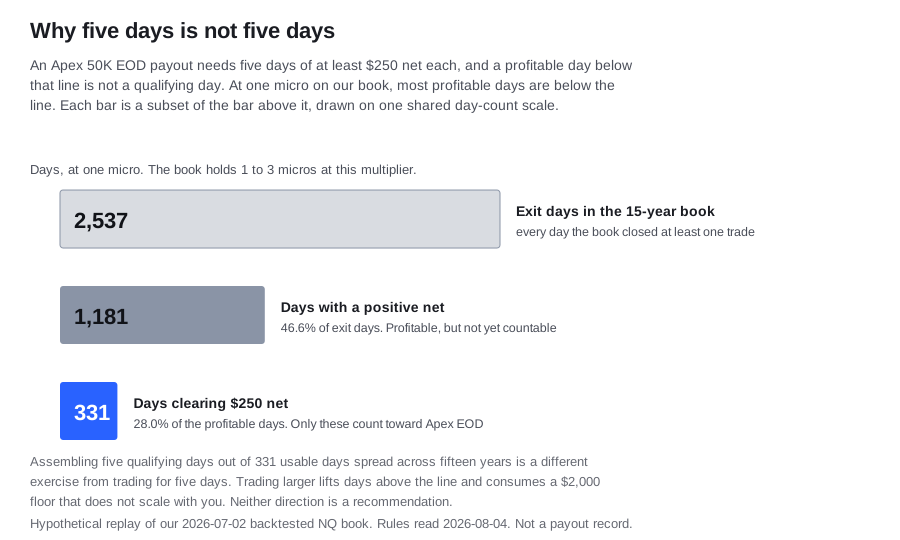
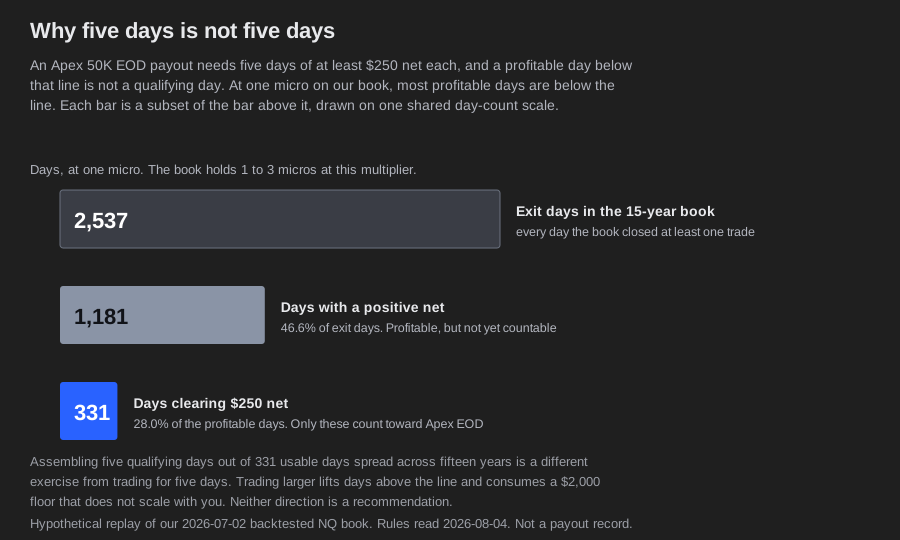
Profitable and countable are different words, and the distance between them is the rule nobody prices.
On Take Profit Trader the real gate is the buffer. There is no day count, so the only question is how long it takes to bank $2,000 above the starting balance and keep it. A book that gets there in one or two large days is fast at TPT. A book that grinds waits, with no partial credit for the days along the way.
On Topstep the real gate is neither. It is the 40% largest-day cap on the fast path, a constraint on the shape of the profit rather than on its size or its timing.
Pull your own daily net P&L history and count three things. How many days clear $250. How long it takes to bank $2,000 of cumulative profit. What share of that profit lands on your single best day. The first is your Apex clock, the second your TPT clock, the third tells you whether Topstep's fast path is open to you at all. Anyone who names a fastest firm without those three numbers is reading a marketing page.
What it looked like on our book
One systematic NQ book: rules-based strategies running a single position at a time on Nasdaq 100
futures, 2011 to 2026, data as of August 5, 2026. From the TradingView List-of-Trades export
STS_v8_[RNORM]_CME_MINI_NQ1!_2026-08-05.csv: 3,500 closed trades, net
$1,112,232.40, on a $100,000
nominal basis, NQ mini sized 1 to 3 contracts by volatility.
We replayed that exact sequence, scaled to MNQ micros, from each of the 2,540 days on which an account could have been opened. Each run passes through the evaluation floor and target, then the withdrawal gates, until a first payout is requestable.
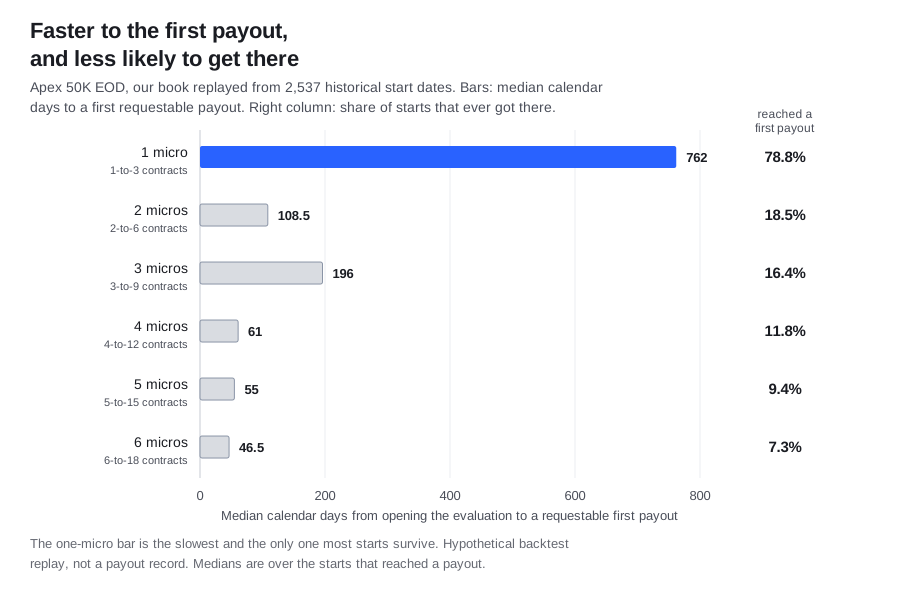
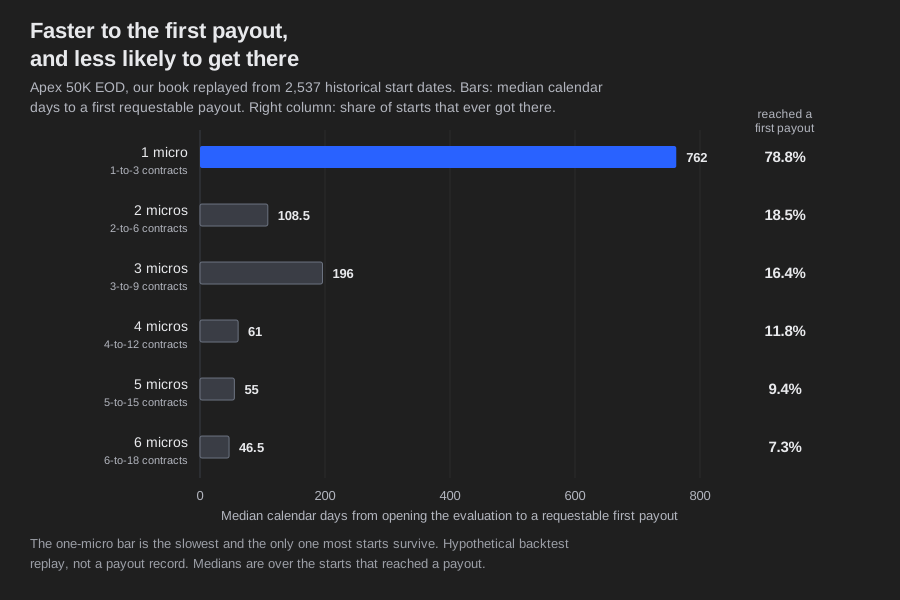
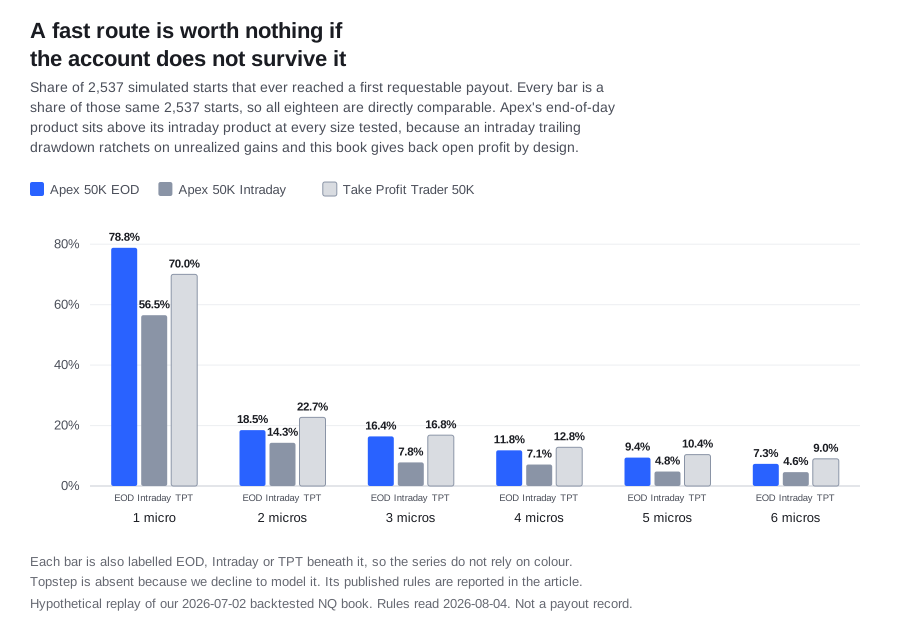
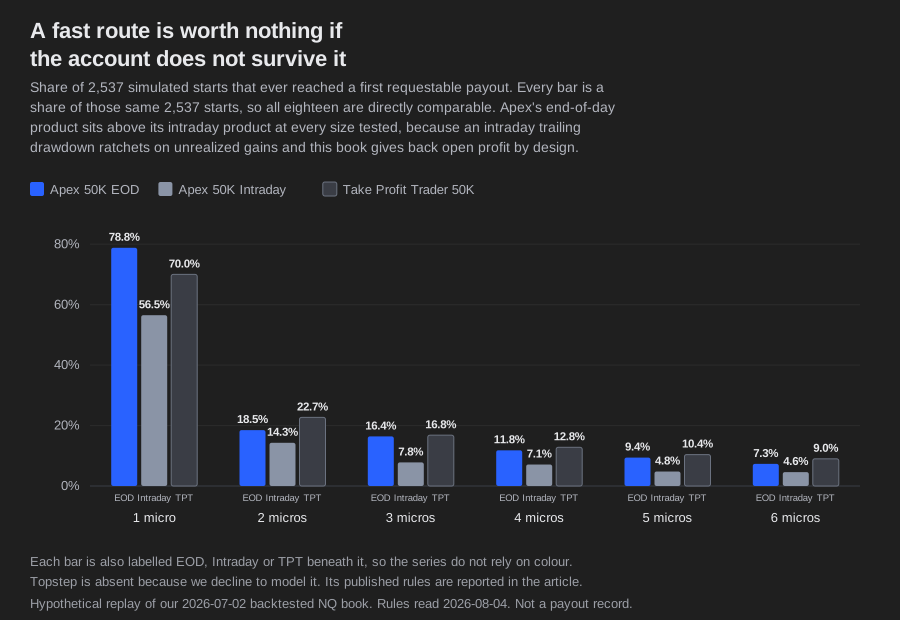
The fast bars are the ones almost nobody reaches. At six micros the median route to a first payout was 46.5 calendar days and 7.2% of starts made it. At one micro the median was 762 days and 78.7% made it. No size in between is both quick and reliable. The middle of the table is not even monotone: the median at three micros, 196 days, is longer than at two micros. The population that survives to be measured changes with size.
Speed and arrival are the same dial turned in opposite directions. Every day you cut off the median, you pay for with starts that never get paid at all. A published "days to payout" figure that does not also publish the share of accounts that reached it is telling you half of a two-part number.
Across the three products we could honestly simulate, Take Profit Trader had the shortest median at every one of the six sizes tested. Having no day requirement to satisfy once the buffer fills is what drives that.
| Micros | Apex 50K EOD | Apex 50K Intraday | Take Profit Trader 50K |
|---|---|---|---|
| 1 | 762 days, 78.7% reached | 1,024 days, 56.5% | 646.5 days, 70.0% |
| 2 | 108.5 days, 18.5% | 144 days, 14.3% | 106 days, 22.8% |
| 3 | 196 days, 16.3% | 159 days, 7.8% | 54 days, 16.8% |
| 4 | 61 days, 11.8% | 76 days, 7.0% | 46 days, 12.9% |
| 5 | 55 days, 9.4% | 57 days, 4.8% | 37 days, 10.5% |
| 6 | 46.5 days, 7.2% | 50 days, 4.6% | 27 days, 9.1% |
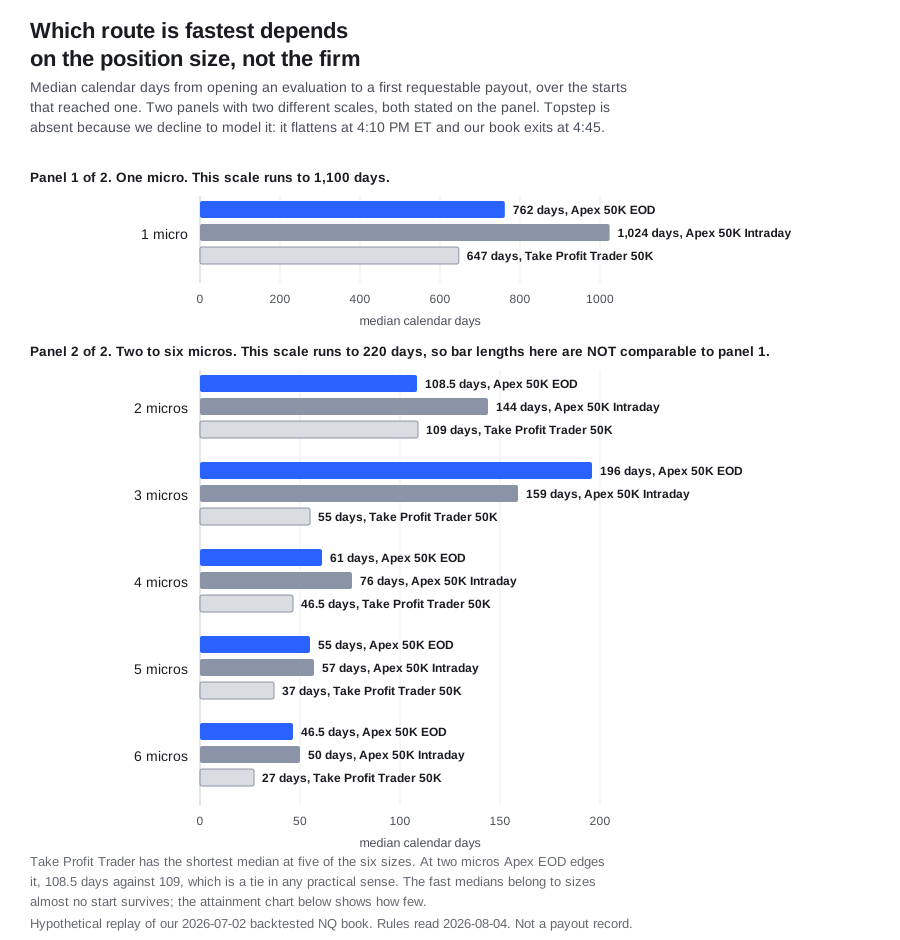
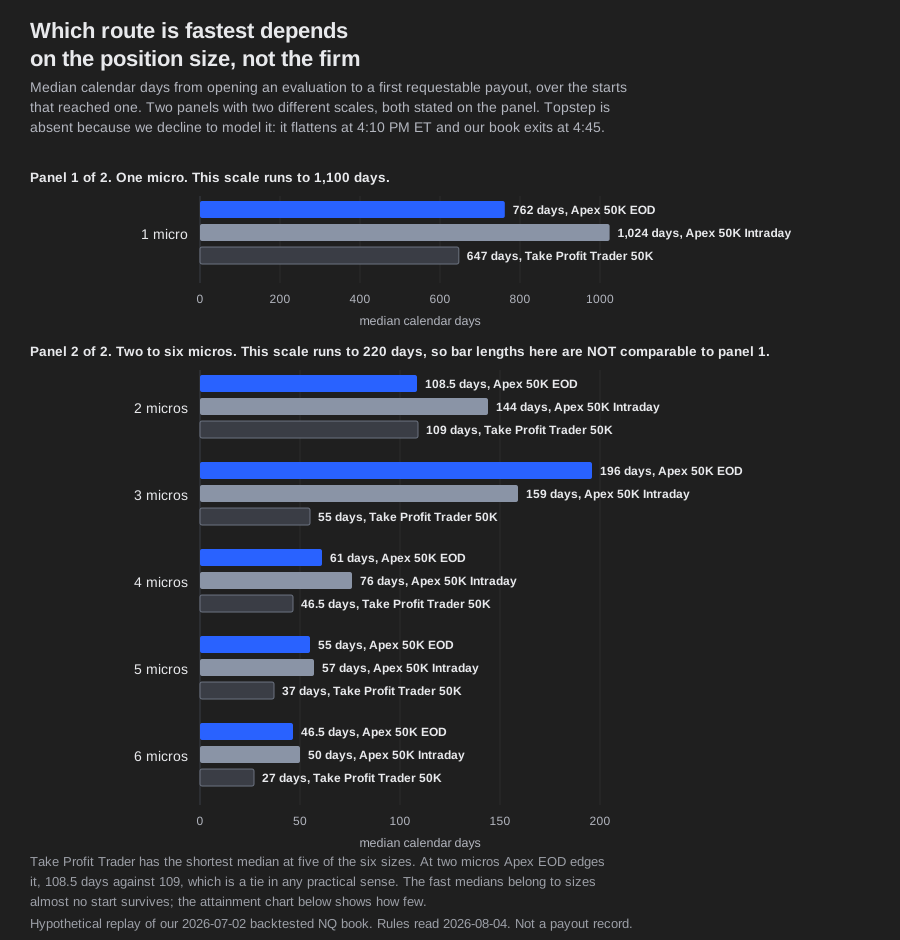
Two readings hold across the whole table. Apex's end-of-day product reached a payout on a higher share of starts than its intraday product at every size tested, and was faster at five of the six. The reason is the mechanic: an intraday trailing drawdown ratchets on peak balance including unrealized gains, and this book gives back a lot of open profit by design. On Apex that choice is made at purchase and cannot be converted later, so it deserves more thought than the price difference suggests.
And the funded leg is never trivial. At one micro on Apex EOD the median account spent 438 days getting funded, then another 294 days before any payout could be requested. Those are two separate clocks run by two separate rulebooks, and passing the first tells you nothing about the second. If you are still costing out the evaluation leg, we priced it in the true expected cost of getting funded.
The part of the clock nobody counts
Requestable is not received. All three firms publish a processing lag, and it is not the same lag.
| Firm | Approval | Then |
|---|---|---|
| Apex | Review within 2 business days | Funds sent within 3 to 4 business days, bank 3 to 7. Most users receive within 5 to 11 business days total |
| Topstep | Internal approval 1 to 3 business days | Prop-to-Brokerage same day for US by 12 pm CT and no fee; Aeropay instant; Wise 1 to 3; ACH 1 to 3 with a $30 fee; wire 5 to 10 with a $30 fee |
| Take Profit Trader | PRO to TPT Wallet, up to 12 business hours, usually faster | Wallet to US bank via Plaid usually real time, sometimes 1 to 2 business days |
On a route that takes 46 days to reach a request, an 11-day settlement is 24% more waiting. It is also the step most likely to surprise you: the request is instant and the money is not.
Two of these are choices rather than facts. At Topstep the transfer method is yours to pick, and the spread between the free same-day option and a $30 wire is up to ten business days. At Take Profit Trader a withdrawal of $250 or less costs $50 in fees, while anything above it is free. Pick the method before you need it.
If you are optimising for speed, these are the levers
Stated as mechanics, not as advice.
The choice of path at Topstep is free, and it is made per payout request. The Consistency path is 3 days against 5, has no winning-day floor, and pays up to $3,000 rather than $2,000. It costs a 40% largest-day cap. That is the one place in these three rulebooks where a shorter route is bought with a constraint rather than with risk. Whether you can accept it depends on how concentrated your profit is, which is the structural problem a fat-tailed system has with any consistency cap.
The buffer is a one-time cost and the day count is a recurring one. Take Profit Trader's buffer is paid once. Apex's five qualifying days reset after each approved payout. Over a first payout the buffer looks expensive. Over a year of payouts the day count is the larger tax.
The dollar floor per qualifying day is Apex's biggest lever, and it points the wrong way. The only way to convert more profitable days into qualifying days is to trade larger. Trading larger consumes a drawdown floor that does not scale with you. Nothing resolves that tension, which is why we wrote why an optimal contract multiplier does not exist rather than naming a size.
The drawdown mechanic decides whether you arrive at all. The end-of-day advantage above was 22.2 percentage points at one micro. The fastest route is worth nothing if the account does not survive to use it. On the current $2,000 floor, all three firms bust this book at the same trade.
The limits of this analysis
Every rule here was read on the firm's own live page on the date stamped beside it, and the source pages are linked at the end. Prop firms change rules without notice: Apex re-ruled its entire product line on 1 March 2026, and one current Apex help page still carries the retired Legacy payout wording. Re-read the rule yourself before acting on it. We are not affiliated with any prop firm.
This article covers the FIRST payout only. Apex's requirement for the second and later payouts is stated two incompatible ways on two Apex pages that are both live today. The two agree on the first payout, which is why the scope stops there.
On our side: the replay is a hypothetical what-if on a real 15-year TradingView export. An automated reconciliation check gates it, and refuses to run if the parse does not reproduce 3,500 trades and $1,112,232.40 net.
A day is an exit day, and its net is the sum of that day's closed trades. The intraday floor is reconstructed from each trade's own favorable and adverse excursion, which is exact for a book holding one position at a time. Medians are over the starts that reached a payout, so they are survivorship-filtered by construction and are not forecasts. Processing time is excluded from every simulated figure.
Topstep is deliberately not simulated. Topstep flattens all positions at 3:10 PM CT, which is 4:10 PM ET, and our book's end-of-day exit is 4:45 PM ET. 57.9% of its trades are not closed before that deadline. Pricing a Topstep run would need an intraday mark-to-market at 4:10 PM ET that the trade export does not contain. Its rules are reported; its outcome is not modelled.
Every number here exists because the book's per-day P&L is published rather than described. That is also the only way to answer these questions about any system you trade. How many of its days clear $250. How fast it banks $2,000. How concentrated its best day is. A system you cannot count days on is a system you cannot price a payout route for.
Where these rules came from
Every firm rule above was read in a browser, on the firm's own live page, on the date stamped beside it. No search snippets, no cached pages, no third-party comparison sites: prop firms retire rules faster than the rest of the web catches up, and a retired rule reads exactly like a current one. The pages this article works from:
- Apex: EOD payouts, intraday payouts, payout method information, intraday trailing drawdown explained
- Topstep: payout policy, Express Funded Account parameters, trading hours and products
- Take Profit Trader: PRO withdrawals and the buffer, withdrawal processing, withdrawal fees
Any of these can change tomorrow with no announcement. Read the page yourself before you pay, and if it now says something other than what is quoted here, the firm's page wins.
Rules we could NOT verify, and therefore did not state
| Firm | Item | Status |
|---|---|---|
| Take Profit Trader | Any minimum-days requirement before a first payout | UNVERIFIED. No affirmative statement on any live page. Treated as zero here, which is a modelling choice, not a claim |
| Take Profit Trader | Any consistency rule at the payout stage | UNVERIFIED. Absent from the PRO Account Rules and the Universal Trading Policies, but no page affirmatively says there is none |
| Take Profit Trader | Maximum withdrawal, and any minimum interval between payout requests | UNVERIFIED. Neither is published |
| Apex | The requirement for the SECOND and later payouts | CONFLICTING and live today. Product payout pages say 5 qualifying days at $250 or $200 since the last payout; /help-center/additional-helpful-items/payout-method-information/ says eight days including five with profits of $50 or more. Page B is the retired Legacy wording on a current page. This article is scoped to the first payout, where they agree |
| Topstep | Whether an overnight Globex hold is permitted | CONFLICTING on Topstep's own page. Hours table permits, FAQ answers "No." Not load-bearing here |
| Topstep | The doubled 50K caps of $4,000 and $6,000 | Published as a limited-time offer conditional on a Daily Loss Limit added at Combine checkout. Verified as an offer, deliberately not used as the standing figure |
Every trade behind these numbers is on the tear sheet, the strategies are on our strategies page, and the signals are what we sell.
Disclosure. We trade this book live and sell access to the signals, so judge the data accordingly. This article is educational and is not investment advice, a recommendation, or an offer to buy or sell any security or futures contract, and it is not a recommendation of any prop firm, account type, or position size. Nothing here is a projection of income, and no payout scenario described is a promise that any account will produce one. We have no affiliation with Topstep, Apex Trader Funding, Take Profit Trader, or any prop firm. Every rule cited was read on the firm's own live page on the date shown and can change at any time.